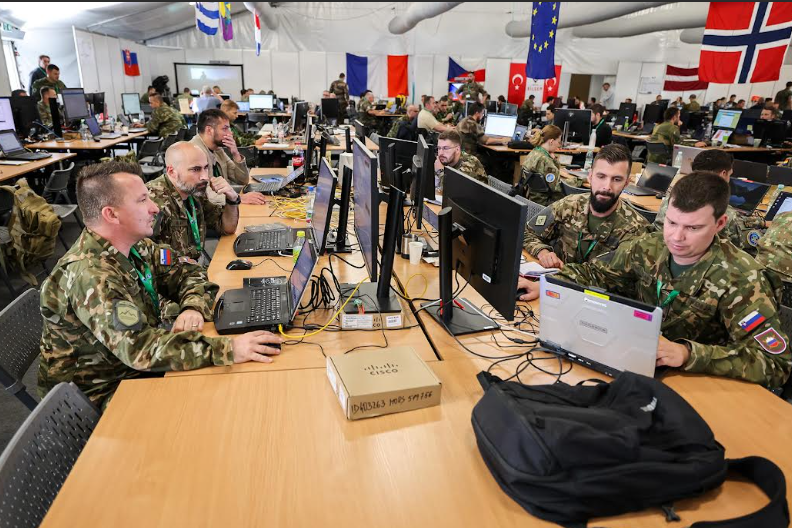
STM Advances NATO’s Command and Control Capabilities
STM Continues to Develop INT-CORE Software to Enable Information Flow within NATO
STM, a leading developer of advanced technologies in the Turkish defence sector, continues to contribute to the NATO Integration Core (INT-CORE) Project, which supports situational awareness across the battlefield. Through ongoing enhancements, STM is strengthening interoperability among NATO’s information systems and improving information flow.
STM Savunma Teknolojileri Mühendislik ve Ticaret A.Ş., which develops innovative systems in the Turkish defence sector and advanced technologies at home and abroad, continues to expand its role in NATO with its engineering competencies.
STM continues, under the leadership of the Presidency of the Republic of Türkiye, Secretariat of Defence Industries, to build on its extensive portfolio of projects developed for NATO, contributing to the advancement of command and control capabilities. In 2024, STM signed a contract with the NATO Communications and Information Agency (NCI Agency) and is carrying out the modernisation of the NATO Integration Core (INT-CORE) system. These ongoing efforts also include the delivery of new technological infrastructures to support NATO’s communication and information systems.
NATO INT-CORE to Gain New Capabilities
The INT-CORE system developed by NATO to support the efficient operation of information systems and to accelerate decision-making processes standardises the information fed from different systems, contributing to increased situational awareness in the field. The main upgrade to the NATO INT-CORE system being provided by STM is the “Lake Diver” component. Lake Diver establishes meaningful links between the large volumes of information from different systems on the battlefield held in the so-called “data lake” of the INT-CORE system. Lake Diver then searches, filters and models large data pools and presents critical information to military decision-makers with maps.
Güleryüz: Developing Advanced Technologies for NATO
Commenting on STM’s relationship with NATO, Özgür Güleryüz, General Manager of STM, said that STM had applied its advanced engineering capabilities to the development of many projects for NATO to date. Addressing the subject of the recent signing of the intelligence sub-software project, he said:
« We are proud to add another project to the list of our international achievements in the field of security and defence. NATO is the world’s largest military alliance, with 32 different countries that operate many different information systems. INT-CORE is the technological infrastructure that facilitates the interoperability of these different systems. The system standardises the data fed from different systems, ensuring that whatever information is needed on the battlefield can be transmitted to the right people at the right time.
We previously provided engineering services for the development, maintenance and support of the INT-CORE project for 5 years, and we are now able to draw from the experience we gained at that time to both modernise and add new competencies to the INT-CORE system. Among the new features we will introduce is the « Lake diver ». Lake diver will effectively analyse the voluminous information held in the INT-CORE, database, and will aid decision-makers in making sense of the data on maps. We will complete the acceptance of the project’s seventh package in February. INT-CORE’s capabilities are being actively used during CWIX, NATO’s largest digital exercise, and the new version will also be deployed in this year’s exercise.”
Strengthening NATO’s Command and Control Processes
NATO INT-CORE provides situational awareness across the entire battlefield, and ensures that decision-makers are provided with the right information at the right time. INT-CORE’s command and control processes support the dissemination of command and control, joint picture, battlefield, mission, etc. information. The NATO Integration Core (INT-CORE) is in active use for information integration and data lake creation, and was most recently demonstrated during the CWIX 2024 exercise. STM provided update and maintenance services for the INT-CORE project between 2017 and 2022. Within the scope of the NATO INT-CORE Project, NATO provided 5-year maintenance and technical support services for the INT-CORE software, which is in operational use by the NATO International Security Assistance Force (ISAF) based in NATO’s Afghan Mission Network Operations Centre (AMNOC).
Background Information
STM’s Experience in NATO Projects
Guided by its mission to “innovate for the future, not just the present”, STM has successfully undertaken several major projects for NATO in the past. STM developed the technical solution for the AirC2IS Project, NATO’s strategic-level air command and control and missile defense information system, and actively participated in its development processes.
NATO Entrusts STM with Its Intelligence Software
The NATO Communications and Information Agency (NCI Agency), which is responsible for the supply, deployment and maintenance of the communications and information systems of NATO decision-makers and commanders, has awarded STM with two major contracts related to the routing, collection, distribution and use of intelligence information within NATO. STM has commenced the development of software for NATO’s intelligence infrastructure under the INTEL-FS2 project. The intelligence applications developed in line with the requests of users through the agile software development method will be used to meet the intelligence processing requirements of NATO headquarters around the world.
STM supports NATO’s decision making processes
STM has provided seven different decision support systems as well as strategic decision support services to NATO to date under the NATO Integrated Elasticity Decision Support Model, which was developed by NATO to understand the effects of strategic shocks such as pandemics, large-scale power outages, cyber attacks and human migrations. This model plays a critical role in accurately analysing the impacts of large-scale, complex challenges, and guides decision-makers in formulating effective roadmaps.
Finally found a club that values loyalty without making you jump through ridiculous hoops. The tier rewards actually match the wagering requirements and the monthly promotions keep things fresh. Great community vibe overall. pushpaclublogin